
Argentina 1978
0By Euan McCabe
How I first became intoxicated by the World Cup by watching the 1978 Tournament in Argentina. The political aspect of a host country ruled by military junta which won the World Cup and the mesmerising scenes of human emotion, which both essentially took place in spite of the junta A bit more detailed and longer than the other two, with less obvious humour and more politics.
Also a brief mention of New Zealand in a section about the famous Kuwaiti game at Mt Smart in 1981.
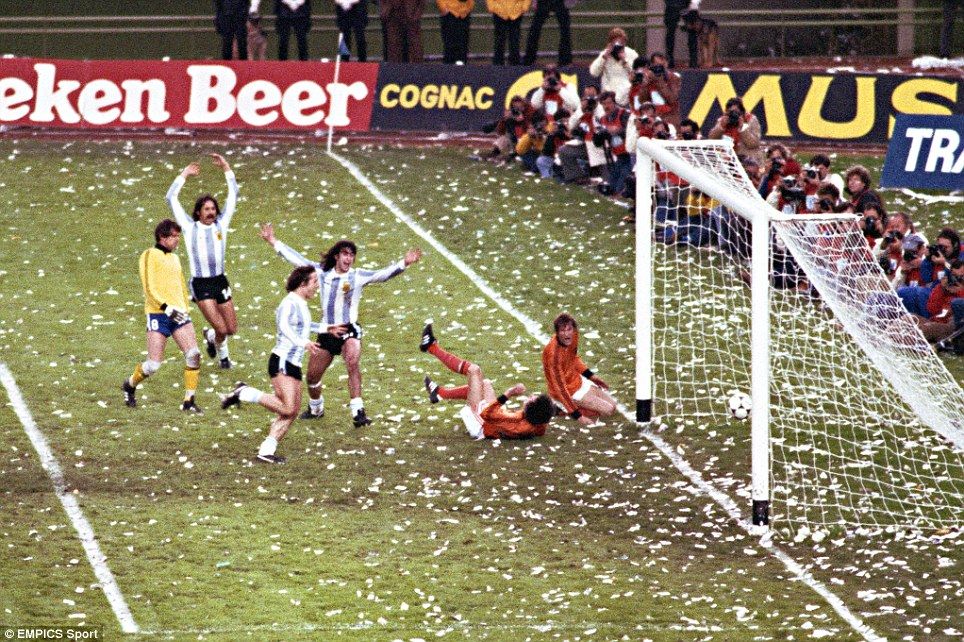 It transpired that even I was not prepared for the 1978 World Cup Finals.
How could anybody teethed on a diet of Commonwealth sport possibly be prepared for the anarchical scenes inside the football stadiums of Argentina?
In fact, the entire tournament confirmed what I had always suspected – but never actually dared believe beforehand – that there was a whole different world out there.
And it was intriguing beyond belief. Military juntas; lives lived in the menacing shadow of guns; fixed matches; cheating; collusion; deception; match officials shamelessly paid off; even governments concocting back-room deals to ensure progression to the next stage.
This so-called football tournament represented almost everything dastardly and horrible about life. It was not the promised peacock; it was a bull elephant leaving behind a turgid pile of steamy shit.
But, at the same time, it proved the most mesmerising, colourful and moving display of human emotion I had ever seen.
The conflictive, ever-powerful, rousing warts-and-all enigma of World Cup football had finally entered my life. And it was worth the wait.
FIFA granted the 1978 finals tournament to Argentina as far back as 1966. Entrusting any World Cup to Argentina is fraught with risk, but wholesale panic must have swept through FIFA House in Zurich when General Jorge Videla thrust himself into power in Buenos Aires on 24 March 1976.
Sufficient time remained to transfer the tournament to a less troubled destination. Amazingly, such a decision never came. Did FIFA choose to just sit tight and hope the tournament passed without incident? Or that General Videla would conveniently come a cropper in the interim? Or perhaps the Latin American defiance of Dr Joao Havelange (is he an actual Doctor of anything?) proved characteristically immovable. After all, it was he who stated afterwards: “The world has seen the true face of Argentina.” Ahem. Whatever. Hindsight emphasised it should never have been allowed to take place. If Mexico 1970 had proved the pinnacle of World Cups, then it took just eight short years and the next journey into the Americas to reach rock bottom.
It was – to put it mildly – slimy and lecherous.
It goes without saying that football owes a great deal to South America. But this is a continent of great contradiction. Exuberant and volatile, the politics always teeter on a precipice of corrupt uncertainty. Deeply passionate and fiercely proud, the football can be as filthy and resentful as it can be skillful and flamboyant. Even Brazil has been guilty at times of adopting defeatist tactics to defend its honour. Argentina, sadly, has been at it for decades now.
I spent some time amongst Argentinians before and after the 1990 World Cup Final. To a man and a woman, just like their football team, they all adopted a flagrant ‘the whole world is against us’ attitude. It is a tragedy that such a great football nation has often possessed insufficient self-confidence to place its trust solely in the talent so obviously available to it.
The insecurities that fuel the desire to obstruct and cheat in preference to possibly losing had existed well before Sir Alf Ramsay became incensed enough to tag them ‘animals’ in 1966. It appears (and also seems characteristic of other South American nations besides Argentina) that the honour of the country is besmirched less by the adoption of scurrilous tactics to try and prevent defeat than the actual loss of a football match.
For all this, I do not want to appear too critical or judgemental. We are all different; a fact that helps makes the world so much more compelling. When Rivaldo collapsed dramatically to the ground in World Cup 2002 after being struck by a ball tossed at him by an infuriated Turkish player, most of the world – including me – groaned with incredulous frustration.
Why does a footballer of Rivaldo’s obvious class need to act in such a scandalous manner?
That was the question I asked myself at the time. And plenty of others would have been asking themselves the same question. But back in Brazil, where Rivaldo was born and raised, attempting to deceive a referee is considered in some circles to be a clever act, not immoral. As stated before, we are all different.
FIFA’s task, however, is to strive persistently for the highest ideals of the game to be upheld and observed, no matter how challenging that is in a world crowded with differing interpretation. (Rivaldo’s subterfuge contravened every edict ever issued out of Zurich – and I seriously doubt whether the resulting fine of USD$10,000 will convince him or anybody else to act differently.) Therefore, surely it is FIFA’s responsibility to ensure that when the game’s flagship tournament is gifted to a nation where losing is often considered a worse crime than upholding ideals, it then becomes even more provocative and inviting of trouble to effectively encourage a military junta frantic to underline Argentina’s ‘supremacy’ to both its own embattled citizens and the world in general. That is the sporting angle. The political one was even worse. How could FIFA allow its World Cup to be played in a country governed by a regime that was torturing and murdering its own people at the time?
Three years after Argentina 1978, the New Zealand national football team would lose a World Cup qualifier to Kuwait in highly contentious circumstances. It lost after two ludicrous penalties were awarded to Kuwait by an Indonesian referee. The first of these was missed, so the referee was forced to concoct another. A New Zealand defender, head turned away and body swivelled in an attempt to escape the ball, was inadvertently struck on the arm from close range. But a penalty was still ordered, and this time converted. The Auckland crowd – in excess of 30,000 – became incensed and the watching nation enraged. At full-time the hapless Indonesian official required a police escort to leave the field; something that failed to prevent a full can of beer being thrown at him.
I mention this dubious occasion for two reasons.
Firstly, such a reaction in this country is simply unheard of. When a few empty plastic bottles were tossed at the Australian rugby union team – 20 years on from the football match against Kuwait – following a legitimate victory over the All Blacks, there was no end of hand wringing and public vilification of the culprits. Fair enough too. This is the New Zealand way. But the guy who tossed that can of beer in 1981 is still regarded today as something of a national hero. This is because everybody in the country knew that referee was bought off beforehand by the cash-rich Kuwaitis, and New Zealanders simply cannot abide this kind of venal, debased conduct. That can of beer was hurled on behalf of common decency and with the backing of most of the nation.
Secondly, my English teacher at the time, a man who represented New Zealand at basketball, refused to acknowledge that the referee had been unduly ‘influenced’. This placed him in a minority of one. But his argument was this: once you accept that a sporting official, any sporting official, has intentionally acted improperly, then you have crossed a line from which there is no return. Every subsequent official, the great majority of which are simply performing a task to the best of their abilities, become open to suspicion or accusation if they should ever make simple errors of judgement. He concluded that the Indonesian referee in question simply had an ‘off day’ that featured a couple of unfortunate mistakes.
Argentina and New Zealand are clearly worlds apart.
So, almost three decades on, what are we to make of World Cup 1978?
Subsequent evidence has arisen to confirm what most sensible people suspected at the time – that some cash and grain proved sufficient to persuade the Peruvian government to accept Argentina’s offer to chuck the game between the two countries. Argentina, in a tournament without semi-finals, needed to beat Peru by four or more goals to advance directly to the final at the expense of Brazil.
Argentina won 6-0. How very convenient. How blindingly obvious.
In light of what has been established, should Argentina’s first World Cup triumph be expunged from the record books? It goes without saying that it would not have secured this title if Brazil and Holland had been playing in the final. Should its shirts today bear just the one star instead of two? Should its shirts bear any stars? Would they have got past England in the 1986 quarter-final if not for the intervention of God that now turns out to have been rooted in more mortal method?
Yet, perhaps the saddest aspect of 1978 is this: Cesar Luis Menotti’s team was a highly talented, organised and efficient football team with a licence to attack. Menotti’s way was not obstructive, it was rooted in positive and expressive football. Peru had already been beaten 3-0 by Brazil. The six goals Argentina produced against Peru, even allowing for some intentionally slack marking, all featured quality build-up and excellent finishing. Three were medium-range efforts that would have defeated most goalkeepers. This Argentinean team could well have advanced to the final on merit if only left to its own devices.
It all merely confirms the often-eccentric contradiction and ubiquitous bizarreness of Argentine football; not to mention the politics of a nation that still seems to be struggling with the always muddled consequences of colonisation. Where controversy and accusation should be percolating, Argentina seems determined to ensure they are never far away. They would win more friends and so much more respect if they just concentrated on the football and ignored the outside influences.
But I guess this is similar to asking an Eskimo to forget about fish – especially in 1978, when Videla was constantly lurking in the background, covertly pulling the strings.
And how was a 15-year-old New Zealand boy supposed to react to all of this?
He should be conditioned to reject it outright, to abhor the political system that fosters it and the sporting body that stands aside and allows it to unfurl. On the surface, the Football World Cup of 1978 offered little opportunity to celebrate mankind or to enthuse over a game seemingly riddled with scandal and discrepancy. It should have convinced him of a better way and the need to head off and pursue it somewhere else.
But my life changed when television first delivered me into the swirling cauldron of fluttering paper, deafening noise and rabid human emotion that was the Estadio Monumental, Buenos Aires in 1978.
It was overwhelming. And – unlike large chunks of this blighted tournament – authentic.
Military or ideological dictatorships have a disturbing habit of tagging buildings and streets with the most absurd and cheesy names possible. It is almost as if they are trying to tempt people into smirking as some kind of test of their allegiance. How else could you possibly explain the reasoning behind the Bolsheviks’ decision to rename St. Petersburg’s enduring Nevsky Prospect, The Prospect of 25 October? Thank goodness night-clubs did not abound in the former Soviet Union. Imagine telling your friends to meet you at ‘The Umbrageous Den of the Fallen Bourgeois Whore’. But in Argentina circa 1978, General Jorge Videla’s Department of Renaming cracked it with Estadio Monumental.
River Plate, its official unideological name, was pallid in comparison.
There is always presumptive cynicism about displays of collective people power in countries blessed with a regime. And rightly so. If offered the choice of obediently standing to cheer the General as he arrives at the game or risk my lack of enthusiasm being detected and suffering the unpleasant consequences, I would be the first to my feet.
But military dictatorships come and go, economies crash and recover, armed forces invade islands belonging to other countries and are embarrassed. To be Argentinean, however, is a thread that supersedes any human folly. Even General Videla would have realised that the display of emotional power and the affection for Argentina, so clearly exhibited within the turbulent bowels of Estadio Monumental, had little to do with either him or any of his bullying cronies. And even after allowing for the home team not having a mandate to be present at Estadio Monumental on the day of the final, when Daniel Bertoni fired the ball home to confirm his country’s new status as World Champion, there would not have been a cogent Argentinean alive not either leaping into the air, slumping to their knees in euphoric disbelief, or thrusting their arms skywards towards God. And not one would have been pretending just to appease the overblown ego of a transient General.
What helps make the game of football so exceptional is the way the explosive chemistry of competitors engaged in tense low-scoring contests is able to instinctively transfer itself into the stands. It does not always occur – sometimes the crowd can be as dreary and uninspiring as the football – but when it does, human expression is seldom more absolute or exhilarating. Especially in the sport’s most significant event, when mankind – rightly or wrongly – reaches down into the absolute depths of nationalism.
Buried amongst the bristling pages of every dictionary lies a truly wonderful word, a word that demands sparing use, a word – when employed in its intended context – has a descriptive accuracy capable of sending a small tremor down the spine. Sadly, this word has been kidnapped, held to ransom and callously slandered by a generation that now imparts it with a grinned ignorance.
This word, according to my Collins English Dictionary, means: ‘to inspire overwhelming wonder, admiration, respect, or dread’.
That was my lasting perception of the XI Campeonato Mundial de Futbol 1978.
Awesome.
It generated within me wonder, admiration, respect and dread. It thrilled me and it frightened me. This is the power of the World Cup.
Follow Euan on Twitter