
LIV…. and let die
0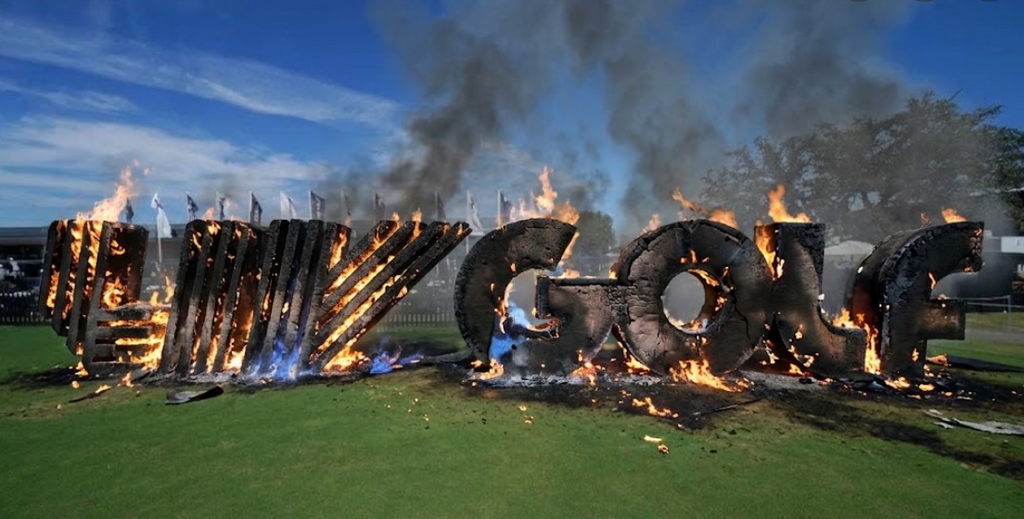 By Scott MacLean
Golf’s Civil War is over, not won with a roar on the course, but with a whimper in a New Jersey bankruptcy courtroom as the breakaway LIV Golf League shut down operations after a five-year run.
LIV Golf was born of many things, but was largely the brainchild of Australian star Greg Norman. The “Great White Shark” had previously floated the idea of a ‘World Tour’ in the late-90s but despite having the backing of Fox Sports it failed to get off the ground. The idea though didn’t die, and much to Norman’s chagrin it was picked up by then-PGA Commissioner Tin Finchem and the Federation of PGA Tours who ran the World Golf Championship events from 1999 until 2020.
A wounded shark is a dangerous one though, and Norman – the iconoclast he is – brooded and bided his time. That came when the Saudi Arabian government, who had plans of their own, came on board. And that came with the massive riches of Saudi’s Public Investment Fund (PIF), taking Norman’s biggest headache – money to fund the idea – completely off the table.
When launched, the upstart offered a considerable alternative. A shorter, set, schedule of 54-hole events (in part a reason for the league’s name, ‘LIV’ is 54 in Roman numerals), guaranteed money in addition to winnings, and a relaxed dress code (i.e. shorts). For many that and the money on offer, it was an intoxicating and compelling offer. Those that signed up included everyone from multiple-Major winners through to relative journeymen, triggering a firestorm through the usually placid golf world.
The recriminations were swift. The PGA Tour banned anyone who made the switch, while the DP World (nee European) Tour instituted a fines system though relaxed their stance eventually. The players were branded as traitors, and Norman as something far worse. All this came to something of a head when a group of the leading European defectors held a press conference to explain their decision, and were confronted with having to give an opinion on their new paymasters in the wake of the Saudi regime’s brutal elimination of dissident journalist Jamal Khashoggi and their human rights record in general.
——————-
On the course, LIV delivered a string of strong, competitive events while appealing to a much younger demographic than traditional golf, and being able to bring names like Brooks Koepka, Phil Mickelson, Jon Rahm, and Bryson DeChambeau to countries and places – like Adelaide, Hong Kong, and Johannesburg – that they would likely never see.
But off it, it was very different story. Commercial sponsors were difficult to come by, broadcast rights income was minimal, what media coverage there was almost invariably cloaked in negativity, and cut-through with the golfing public at large almost non-existent. For each of its first four years it ran up losses that were eye-watering, and while USD$4 Billion might be a rounding error in the PIF accounts, even the Saudi regime had to be concerned about the return on their investment.
Attempts at a reconciliation with the PGAT and DPWT stalled, and until early in 2026 it wasn’t even acknowledged by the Official World Golf Rankings, complicating the ability of their players to get into the four Majors*. That in turn came with a commitment for all events to be over 72-holes, leading to some quipping if the league would rename to ‘Lexi (LXXII) Golf’.
By this time Norman had gone, replaced by American Scott O’Neill as CEO and given the massive task of making LIV financially more self-sustaining. It was the first real crack in the organisation, and the second came when five-time Major winner Koepka, through his Florida neighbour Tiger Woods (who had himself reputedly been offered USD$800 million to switch in 2022) negotiated his way back to the PGA Tour. Former Masters winner Patrick Reed followed, albeit playing out the 2026 season on the DPWT as he was ineligible for the same deal Koepka received.
The end for LIV became much more real in April this year, when the PIF announced it would be ceasing its funding. While reasons such as the Kingdom’s hosting of the 2030 World Expo and 2034 World Cup were given, it also coincided with the US attacks on Iran and the tit-for-tat exchange that has gone on since. Shorn of its sugar-daddy, LIV searched for new partners but to no avail, and in September filed for bankruptcy protection. Some funding was found but, on the condition, enough players signed-up for “LIV 2.0”, but with what that looked like uncertain at the very least most departed. The offer was withdrawn and LIV Golf ceased to exist.
Unlike some, namely Rory McIlroy, I’m not going to dance on its grave. To an extent, LIV showed us that tournament golf could be an entertainment product as well, and that there’s more than one way golf can be showcased. But what underpinned it was just a house of cards, destined to fail in any sort of breeze.
* the Majors are part of, but run separate to, the tours. After LIV’s establishment the four organisers – Augusta National (Masters), PGA of America (PGA Championship), US Golf Association (US Open), and The Royal & Ancient (Open Championship) chose to leave their respective qualification criteria and process untouched.
Follow Scott on Twitter